Charging an electric car in the UK isn’t as straightforward as plugging in and paying a fixed price. Your EV charging cost UK depends on where you charge, the size of your battery, and the electricity tariff you’re on. From home EV charger installation London to public rapid charger cost UK, this guide breaks down what you need to know to keep your running costs low and your charging smart.
If you’re considering business EV charging, you might want to explore this practical guide for London and Surrey workplaces. Additionally, for those wondering about the best ways to charge their EVs at home or on the go, take a look at smarter ways to charge in London & Surrey. For reliable charge points, the Blink Charging Stations in London & Surrey offer smart solutions for both homes and businesses.
Understanding EV Charging Costs
Charging an electric car can vary in cost based on your location and methods. Let’s explore the different options available to you.
Cost to Charge EV at Home
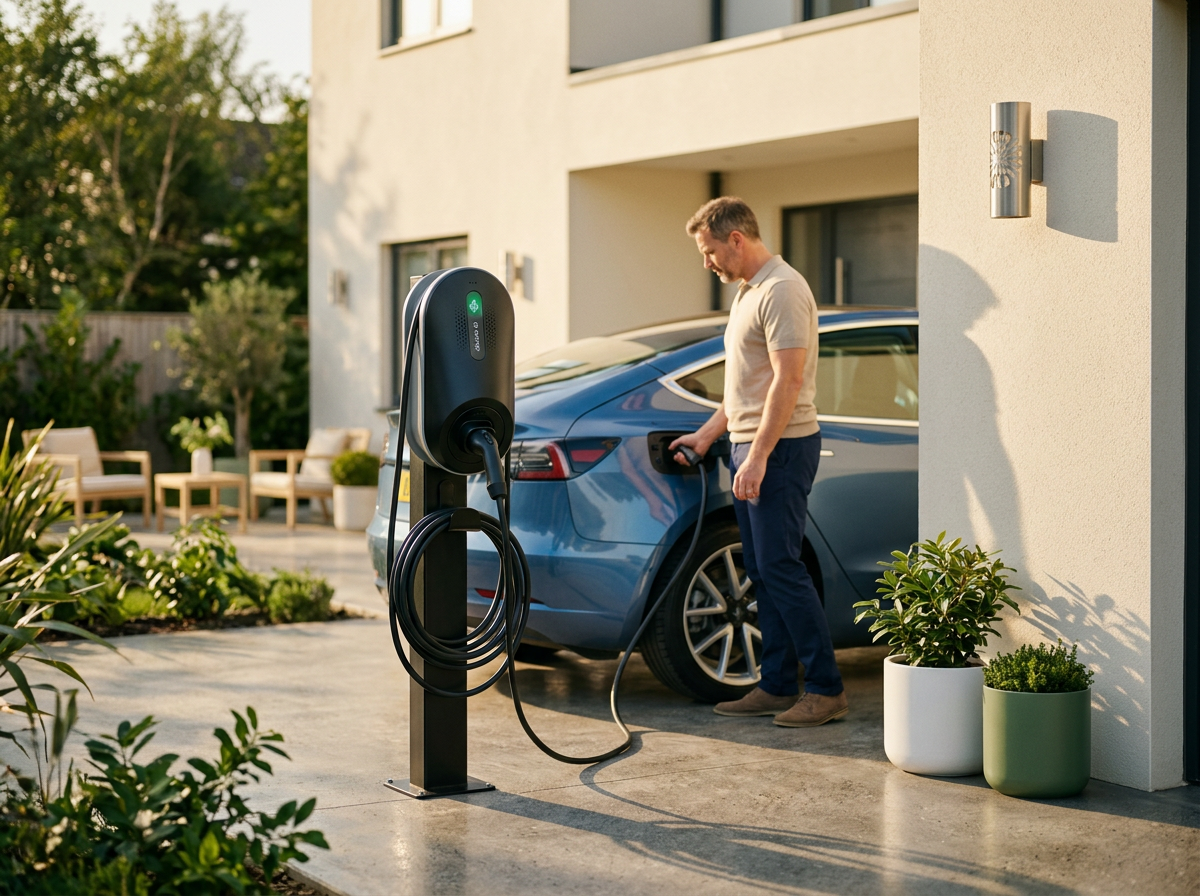
Charging your electric vehicle at home is one of the most convenient options. Here’s the key insight: if you charge during off-peak hours, you’ll save money. Typically, the cost to charge EV at home is around 14 pence per kWh. For a full charge, it might cost anywhere from £5 to £10, depending on your battery size. Investing in a smart home charging station can further enhance savings by allowing you to schedule charges during cheaper electricity rates.
Workplace EV Charging Costs
For those who drive to work, charging at your workplace can be a practical and economical choice. Many companies are now offering workplace charging options, sometimes even at no cost to employees. The average cost here can vary but often aligns with commercial electricity rates, generally between 12 to 15 pence per kWh. If your workplace participates in schemes like the OZEV Workplace Charging Scheme, you might benefit from reduced installation costs.
Public Rapid Charger Cost UK
Using public rapid chargers is sometimes necessary, especially on long journeys. Rapid chargers are more expensive, typically costing between 30 to 40 pence per kWh. However, they provide a quick solution, charging your vehicle up to 80% in about 30 minutes. While convenient, frequent use can add up, making it a pricier option compared to home charging.
Factors Affecting Charging Costs
Understanding the factors influencing your charging costs can help you make more informed decisions.
EV Charging Tariffs UK
Electricity tariffs in the UK can significantly affect your charging costs. Different providers offer various plans, with some offering special EV tariffs that reduce costs during off-peak hours. For instance, some tariffs might drop to 5 pence per kWh during these times.
Charger Speed and Battery Size
The speed of your charger and the size of your battery also play a crucial role in determining costs. Faster chargers draw more power, which can increase costs. Larger batteries require more electricity to charge fully.
Efficiency and Energy Usage
How you use your vehicle affects overall costs. Driving efficiently and maintaining your vehicle can reduce energy usage. Regular maintenance ensures that your car operates at peak efficiency, using less electricity per mile.
Reducing Charging Costs

Let’s explore strategies to cut down your charging expenses.
Smart EV Charger UK
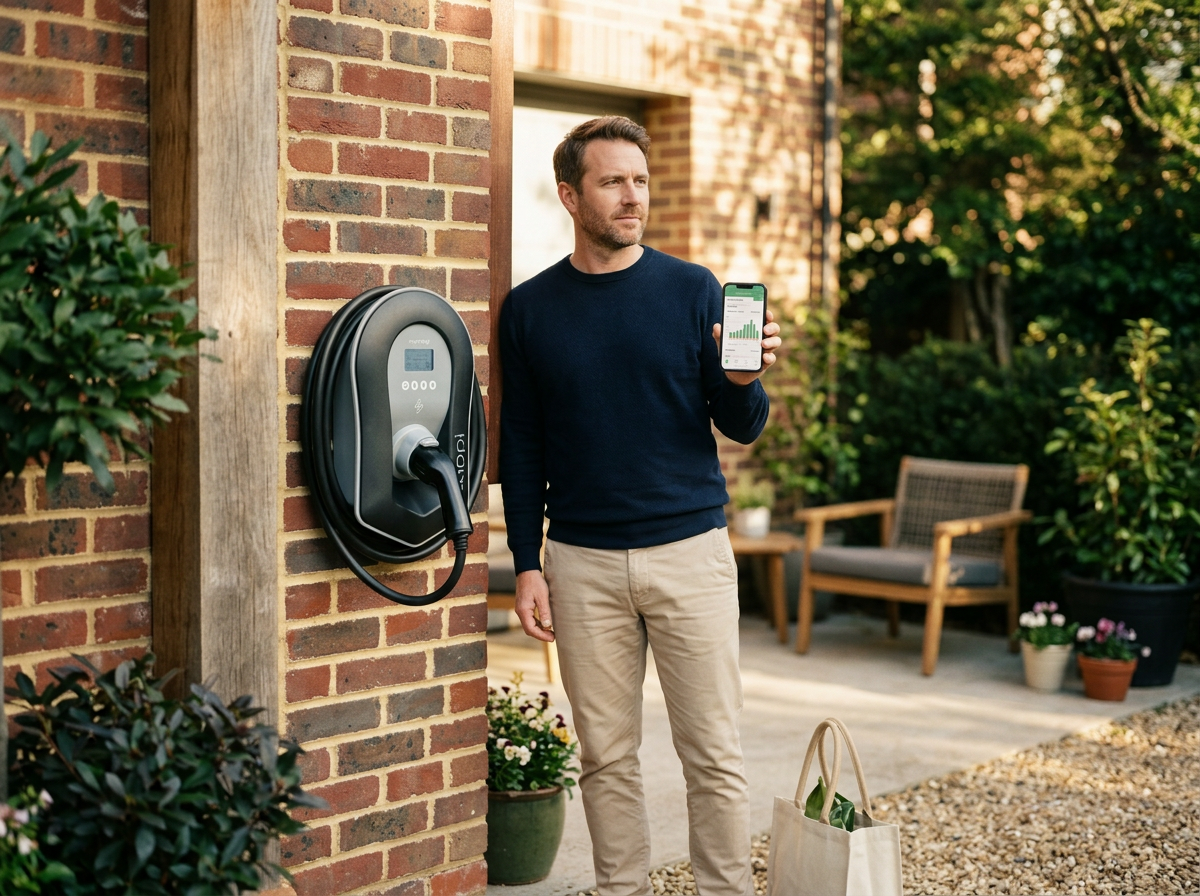
A smart EV charger can optimize your charging schedule. These devices connect with your smartphone, allowing you to control charging remotely. By scheduling charges during off-peak hours, you can lower costs noticeably.
Solar PV and Battery Storage
Integrating solar PV systems with battery storage at home can dramatically reduce costs. By generating your own electricity, you can power your EV at little to no cost during daylight hours. Additionally, storing excess energy in a battery allows you to charge your vehicle even when the sun isn’t shining.
Energy Tariff Off‑Peak EV
Switching to an off-peak energy tariff can result in significant savings. These tariffs offer reduced rates during specific hours, usually overnight. By aligning your charging schedule with these hours, you can enjoy lower costs per kWh.
Frequently Asked Questions
How much does it cost to charge an electric car at home in the UK?
Charging at home can cost around £5 to £10, depending on your battery size and electricity tariff. Using off-peak rates can further reduce costs.
What is the cost of charging an electric car at public stations?
Public charging can range from 30 to 40 pence per kWh. While convenient for quick charges, it’s more expensive than home charging.
Does workplace charging cost less than public charging?
Yes, workplace charging is often cheaper. Many workplaces offer competitive rates, sometimes even for free, especially if they participate in government schemes.
Are there special tariffs for EV charging in the UK?
Yes, several providers offer EV-specific tariffs that reduce costs during off-peak hours, making charging more affordable.
Can solar panels help reduce EV charging costs?
Absolutely. Solar PV systems paired with battery storage can power your EV with minimal costs, especially during sunny days.
Start the new year strong with expert advice and early project booking.