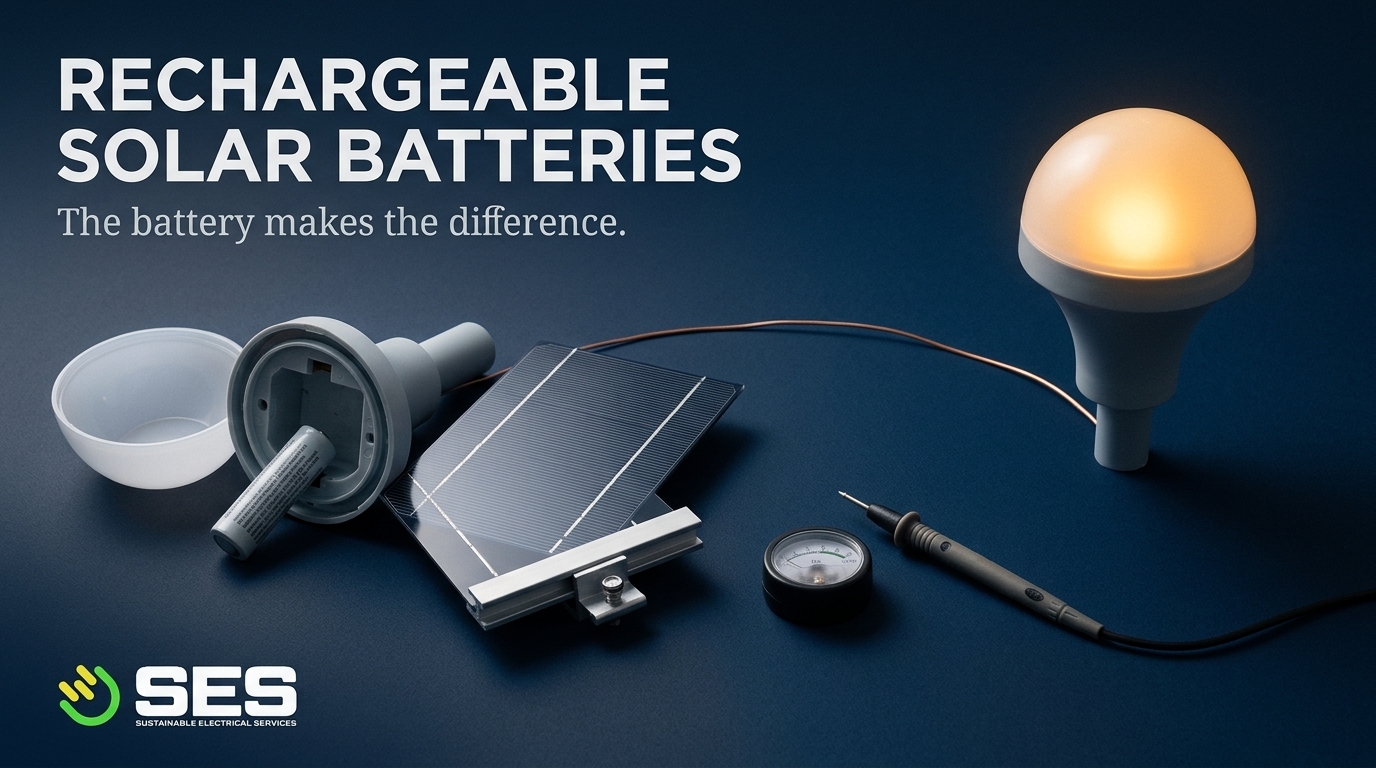
Many solar lights promise lasting glow, yet some fade after a single season. The secret isn’t just the solar panel—it’s the rechargeable solar batteries inside. With over 30 years in electrical work, we’ve learned that choosing the right battery and fitting it to your light’s use and location makes all the difference. Keep reading to find out how the right battery keeps your solar lights bright through London and Surrey’s changing seasons. For further insights, visit this comprehensive guide.
The Importance of Battery Choice
Choosing the right battery can transform your solar lights from dim disappointments to reliable sources of illumination. Understanding why this choice matters is crucial.
Why the Correct Battery Matters
The battery in your solar light is the heart of the system. While many focus on the solar panel, the battery is key to storing and providing power. With it, your lights can shine brightly even on cloudy days or during winter. Choosing the best option ensures your lights remain reliable. For those in London and Surrey, it’s vital to consider local weather conditions. This decision will affect how well your lights perform and how long they last.
Common Mistakes in Battery Selection
One common mistake is selecting a battery that doesn’t match the light’s requirements. Some might think any battery will do, but that’s not the case. Using the wrong type can lead to poor performance and short lifespan. Another pitfall is ignoring the battery’s capacity. If it’s too low, your lights won’t last through the night. Many overlook the impact of temperature on battery performance. Cold weather can drain energy faster, making it crucial to pick a battery suited to your climate.
How to Choose the Right Battery
To choose wisely, first, consider your location and light use. For example, in London and Surrey, you’d need a battery that can handle variable weather. Check the battery capacity in mAh; the higher, the longer the lights last. Match the battery type to your light’s demands. Look up expert advice or consult experienced professionals to avoid mistakes and select the best fitting battery. Explore different options at Anker Solix’s Solar Batteries for Outdoor Lights.
Understanding Battery Specifications
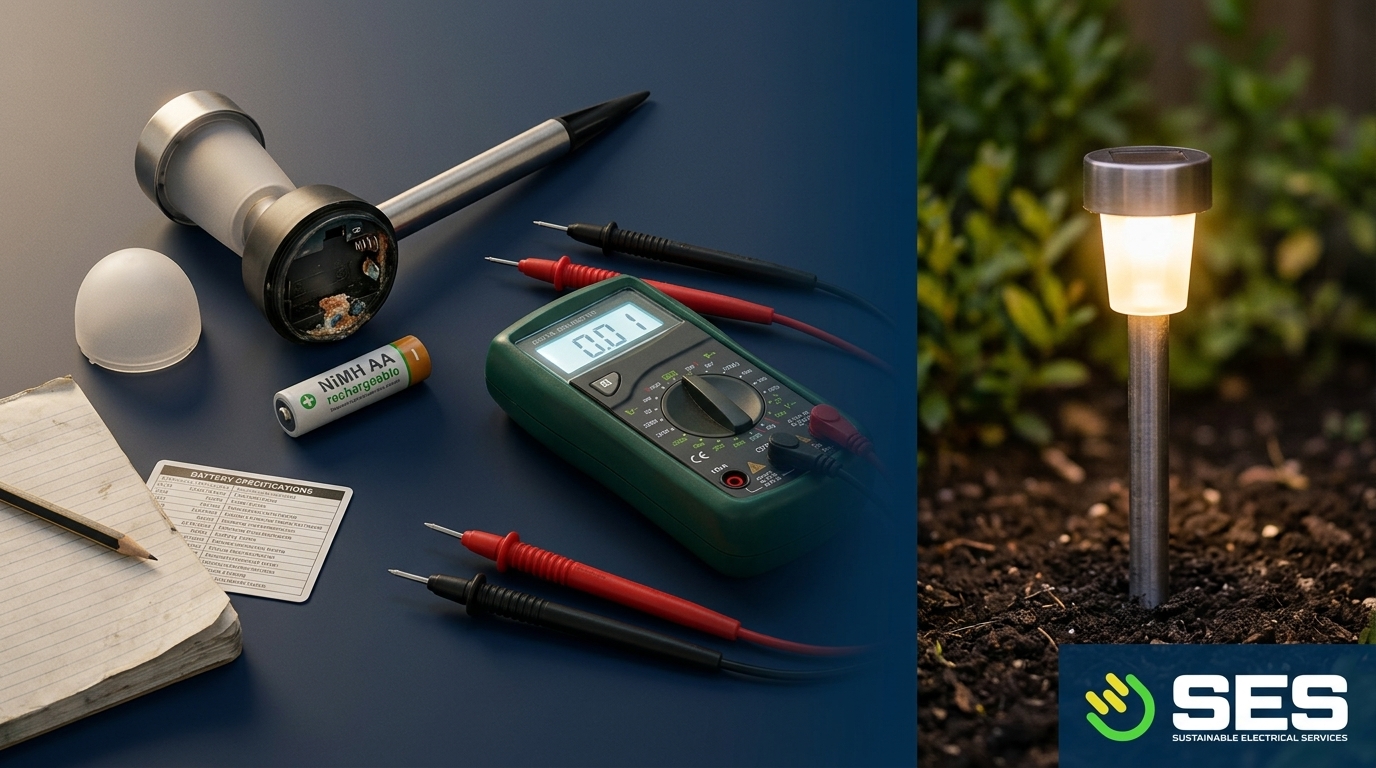
Understanding specifications can help you make informed choices. It’s not just about picking a battery; it’s about knowing what each type offers.
NiMH vs LiFePO4 Batteries
Nickel-Metal Hydride (NiMH) and Lithium Iron Phosphate (LiFePO4) are popular choices. NiMH batteries are affordable and easy to find, making them a common choice. They work well in moderate climates and can be recharged many times. LiFePO4 batteries, on the other hand, offer greater longevity and stability. They perform well in extreme temperatures, making them suitable for harsher environments. When deciding, weigh the cost against performance needs, especially if you live in areas with varying weather. Dive deeper into battery types with this YouTube guide.
Solar Light Battery Capacity mAh
Capacity, measured in milliamp-hours (mAh), determines how long your lights can stay on. A higher capacity means longer lighting after sunset. For garden solar lights, aim for a capacity that suits your light’s use. Consider how long you want your light to last each night. If your lights are for security or decoration, you’ll need different capacities. Always check the mAh rating when purchasing, as this will directly influence performance.
Depth of Discharge and Charge Cycle Life
Depth of discharge affects how much of the battery’s capacity is used before recharging. Using more can shorten battery life. Charge cycle life refers to how many times it can be charged and discharged before it loses effectiveness. Aim for a balance: deep discharges can reduce overall cycles, while shallow discharges extend battery life. Knowing this helps in making informed choices for your solar light needs.
Enhancing Solar Light Performance
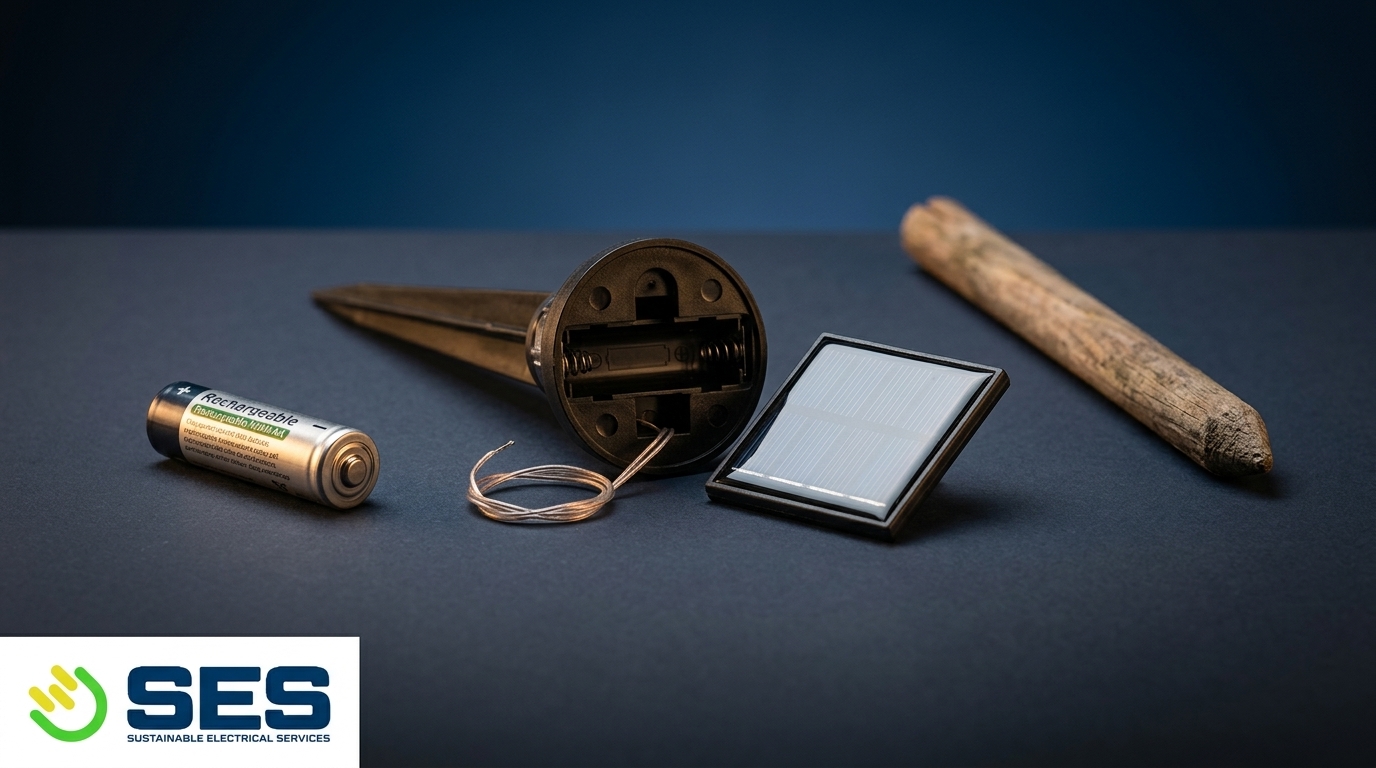
Optimising your solar lights can extend their usefulness and brighten your evenings. Here’s how you can ensure top performance.
Winter Solar Light Performance UK
In the UK, winter can be a challenge for solar lights. Shorter days and overcast skies mean less charging time. To keep lights working, choose batteries that perform well in low-light conditions. Consider using reflectors or placing lights where they’ll get maximum sunlight. Also, clean the solar panels regularly to ensure efficiency. With these tactics, even UK winters won’t dim your lights’ glow.
IP Rating for Outdoor Lights
An IP rating reveals how well a light resists dust and water. Higher numbers mean better protection. For outdoor lights, an IP65 or higher is ideal. This ensures they can withstand rain and dust, common in many regions. Don’t overlook this rating; it’s essential for long-lasting lights that perform regardless of weather. For more on how to choose the right battery, visit Manly Battery’s guide.
Motion Sensor vs Dusk-to-Dawn Lighting
Motion sensor lights activate when they detect movement, saving energy by only lighting up when needed. Dusk-to-dawn lights turn on automatically at sunset and off at sunrise. Choose based on your needs: motion sensors are ideal for security, while dusk-to-dawn are great for continuous lighting. Each type serves different purposes, so consider where and how you plan to use them.
Frequently Asked Questions
What type of battery is best for solar lights?
LiFePO4 batteries are often recommended because they last longer and handle extreme temperatures well. However, NiMH batteries are also a good choice for moderate climates.
How can I improve solar light performance in winter?
To enhance performance, ensure solar panels are clean and positioned for maximum sunlight. Choose batteries designed for low-light conditions and consider using reflectors.
What does the IP rating mean for solar lights?
The IP rating indicates a light’s resistance to dust and water. For outdoor lights, an IP65 or higher ensures they can withstand most weather conditions.
Why choose motion sensor lights over dusk-to-dawn?
Motion sensor lights conserve energy by activating only when needed, making them ideal for security. Dusk-to-dawn lights provide continuous lighting, suitable for areas needing constant illumination.
How often should I replace rechargeable solar batteries?
Replacement depends on usage and battery type, but generally, every 1-2 years for NiMH and every 3-5 years for LiFePO4 is recommended. Keeping track of performance can help determine the right time for a change.