When your solar garden lights start to dim, it’s tempting to blame the panel alone. Yet, the real issue often lies in the solar light battery and whether it’s properly matched to your light, location, and sunlight availability. Choosing the right battery size and chemistry matters most, especially to keep your lights reliable through London and Surrey winters. Let’s clear up the confusion and show you what to ask before buying your next solar light.
Understanding Solar Light Batteries
Navigating the world of solar light batteries requires understanding key aspects that ensure your garden lights shine bright through every season.
Importance of Battery Specification
Battery specification is crucial to your solar lights’ success. The right battery ensures that your lights stay on as expected. It’s not just about picking any battery, but choosing one that fits your light’s needs. For instance, selecting a NiMH battery over a LiFePO4 can affect longevity and performance, especially during winter months. A well-matched battery means your lights remain bright and reliable. Understanding these details helps you make informed decisions, cutting down on frustration and enhancing your solar lighting experience.
Common Myths About Solar Light Performance
Many believe that lacklustre solar light performance is due to faulty panels. While panels play a role, the real culprit is often an ill-suited battery. Some think that higher mAh ratings automatically mean better performance. This isn’t always true. A higher mAh doesn’t guarantee improved results if the battery chemistry isn’t right for the device. By debunking these myths, you can focus on what truly matters: the specific battery that aligns with your lighting needs.
Role of Battery in Solar Systems
Batteries are the backbone of solar systems. They store energy captured by solar panels, ensuring lights work even when the sun isn’t shining. A well-chosen battery maintains power levels, supporting consistent light output. Without the right battery, even the most efficient solar panel cannot perform optimally. It’s crucial to choose a battery that complements your system’s requirements, providing the reliability you expect from solar lighting solutions.
Factors Affecting Solar Light Efficiency
Several elements impact your solar light’s effectiveness. Knowing these can lead to improved performance and satisfaction with your solar purchase.
Location and Sunlight Exposure
Location plays a significant role in solar light efficiency. Areas with more sunlight see better performance as more energy is captured. If your garden receives limited sunlight due to shading or geographic location, consider adjusting your setup. For those in London and Surrey, this means positioning lights where they’ll receive maximum sunlight. By optimising location, you can greatly improve the overall efficiency of your solar lights.
Battery Sizing and Chemistry
Correct battery sizing is vital for effective solar lighting. A battery that’s too small may not store enough energy, while one that’s too large might never fully charge. The chemistry of the battery also matters. NiMH batteries are often used, but LiFePO4 options provide better performance in colder climates. Choosing the right size and type ensures your lights work optimally, no matter the season.
Weather Conditions and Seasonal Changes
Weather and seasons affect solar light performance. Winters in the UK often bring less sunlight, impacting battery charge levels. To combat this, consider using a battery that performs well in low-light conditions. Additionally, weatherproofing your setup helps maintain function during adverse conditions. Being aware of these factors allows you to plan accordingly, ensuring your solar lights stay on through varying weather patterns.
Steps to Improve Solar Light Longevity
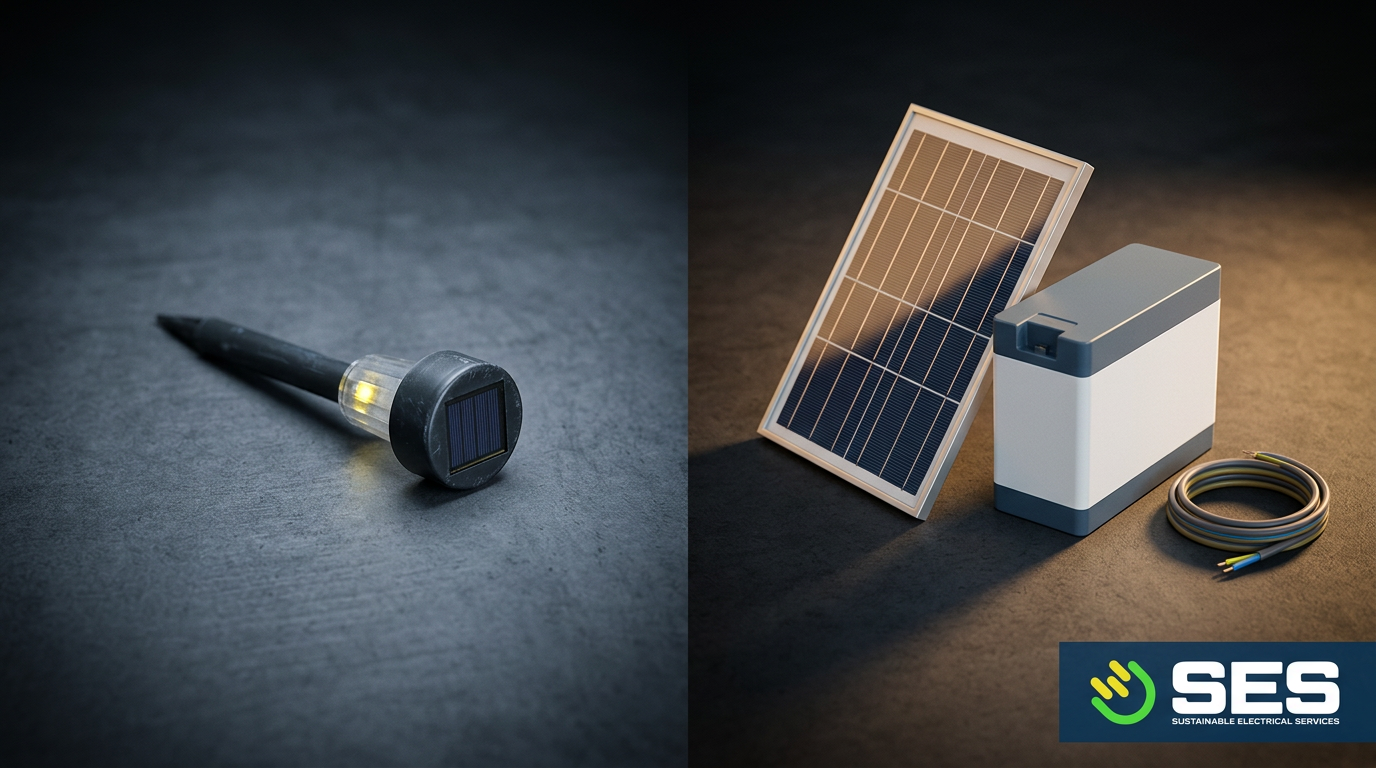
Enhancing the lifespan of your solar lights involves a few strategic actions. Taking these steps can ensure your lights work efficiently for years.
Conducting a Solar Light Spec Check
Start by reviewing the specifications of your current solar lights. Check if the battery matches the panel output and expected usage. If not, it might be time to upgrade your battery. Regular checks help identify potential issues before they lead to performance drops. Keeping track of these details ensures longer-lasting, brighter lights.
Matching Battery to Solar Panel
Properly matching your battery to the solar panel is essential. This involves ensuring the panel’s output is adequate to charge the battery fully. Mismatched systems can lead to underperformance or damage. By aligning battery specifications with panel capabilities, you ensure smoother operation and longer light life.
Seeking Expert Guidance in London and Surrey
For those needing additional support, seeking expert advice is beneficial. Professionals can provide tailored recommendations based on your specific needs and location. In London and Surrey, our experienced team offers insights and solutions that can enhance your solar lighting setup. Leveraging expert knowledge not only improves light performance but also saves time and effort in troubleshooting.
Frequently Asked Questions
Why do my solar lights go dim?
The primary reason solar lights dim is often due to an incorrect or depleted battery. Ensure the battery matches your light’s specifications and that it’s receiving enough sunlight to charge fully.
What is the best battery for solar lights UK?
The best battery depends on your specific needs, but generally, LiFePO4 batteries offer superior performance in the UK’s colder climate, providing longer-lasting energy storage.
How can I improve solar light runtime during winter?
To enhance runtime in winter, consider upgrading to a battery better suited for low-light conditions and ensure your solar panels are positioned optimally for maximum sunlight exposure.
What affects solar light efficiency the most?
Efficiency is primarily affected by battery type, location, and sunlight exposure. Proper battery matching to the solar panel and adjusting for seasonal sunlight changes can significantly improve performance.
How do I know if my solar battery is compatible?
Check the specifications of your solar light and battery. Compatibility involves ensuring that the battery’s capacity and chemistry align with your light’s and panel’s requirements. A professional can help verify this for you.
For further insights into solar battery storage and costs, you can read our guide on Solar Battery Storage Cost in the UK: A Practical Guide for London and Surrey.